Project Description: KidsCarePVS
Post-viral syndromes (PVS) can occur following various infectious diseases, including asymptomatic infections, for example after infectious mononucleosis due to primary infection with Epstein-Barr virus (EBV-IM), influenza or coronavirus disease 2019 (COVID-19). PVS after COVID-19 is also referred to as Long COVID, post-acute sequelae of COVID-19 (PASC) or post-COVID syndrome (PCS). Adolescent girls and young women are predominantly affected. Patients usually suffer from a wide range of symptoms as well as reduced daily functioning, social participation and quality of life. Some individuals are confined to their home or bed, some require nursing care. A particularly severe form of PVS is myalgic encephalomyelitis / chronic fatigue syndrome (ME/CFS). ME/CFS is characterized by the cardinal symptom of exertion intolerance with post-exertional worsening of symptoms following everyday activities, even after minimal physical or cognitive exertion. This hallmark symptom referred to as post-exertional malaise (PEM) or "crash", substantially complicates not only everyday life but also medical care. To date, no diagnostic biomarkers or targeted therapies have been established for PVS or ME/CFS. In addition, there is limited national and international evidence regarding the healthcare situation and unmet needs of children, adolescents, and young adults with PVS, particularly among severely affected individuals with profound participation restrictions
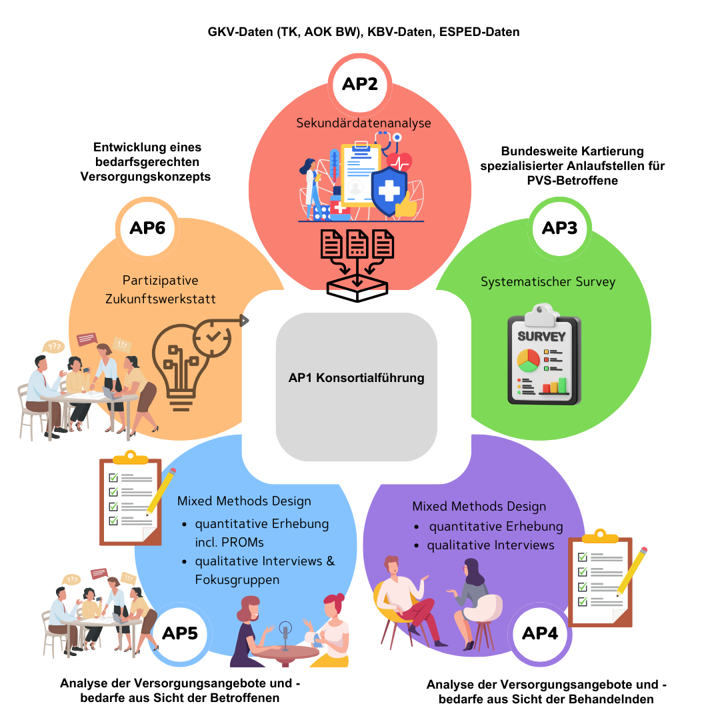
The KidsCarePVS project, coordinated by the Munich Chronic Fatigue Center (MCFC), aims to develop a needs-based care concept for very young people with PVS using multiple data sources. The six subprojects (SPs) include analyses of data from statutory health insurance providers (SHI; SP1), the National Association of Statutory Health Insurance Physicians (KBV) and a dedicated survey conducted by the German Paediatric Surveillance Unit for Rare Paediatric Diseases (GPSU, German: ESPED) (SP2), the development of a nationwide map of specialized PVS care centers and support services for affected individuals (SP3), evaluations of healthcare services and unmet needs from the perspective of healthcare professionals (SP4) as well as affected individuals and their families (SP5); and; finally, the implementation of a participatory future workshop aimed at integrating all findings and deriving appropriate care structures (SP6). Particular attention is given to organizational, procedural and reimbursement-related innovations.
We expect this initiative to contribute substantially to the optimization of care pathways, improved patient orientation and navigation within the healthcare system, enhancing medical outcomes, and greater equity, appropriateness, quality, and cost-effectiveness of care. By bringing together key national stakeholders and complementary areas of expertise in a synergistic consortium, the project will, for the first time, enable a comprehensive assessment of the current state of care and provide a foundation for innovative solutions adressing existing unmet needs.

Project duration
01.04.2025 - 31.03.2028
Collaborating partners
AOK Baden-Württemberg
Berufsverband der Kinder und Jugendärzt*innen e.V.
Charité - Universitätsmedizin Berlin
Otto-von-Guericke University Magdeburg
Technische Universität Dresden
University of Regensburg
Universitätsklinikum Freiburg
Central Institute for Statutory Health Insurance Physicians in Germany
Funding
Innovation fund of the Joint Federal Committee
Web links